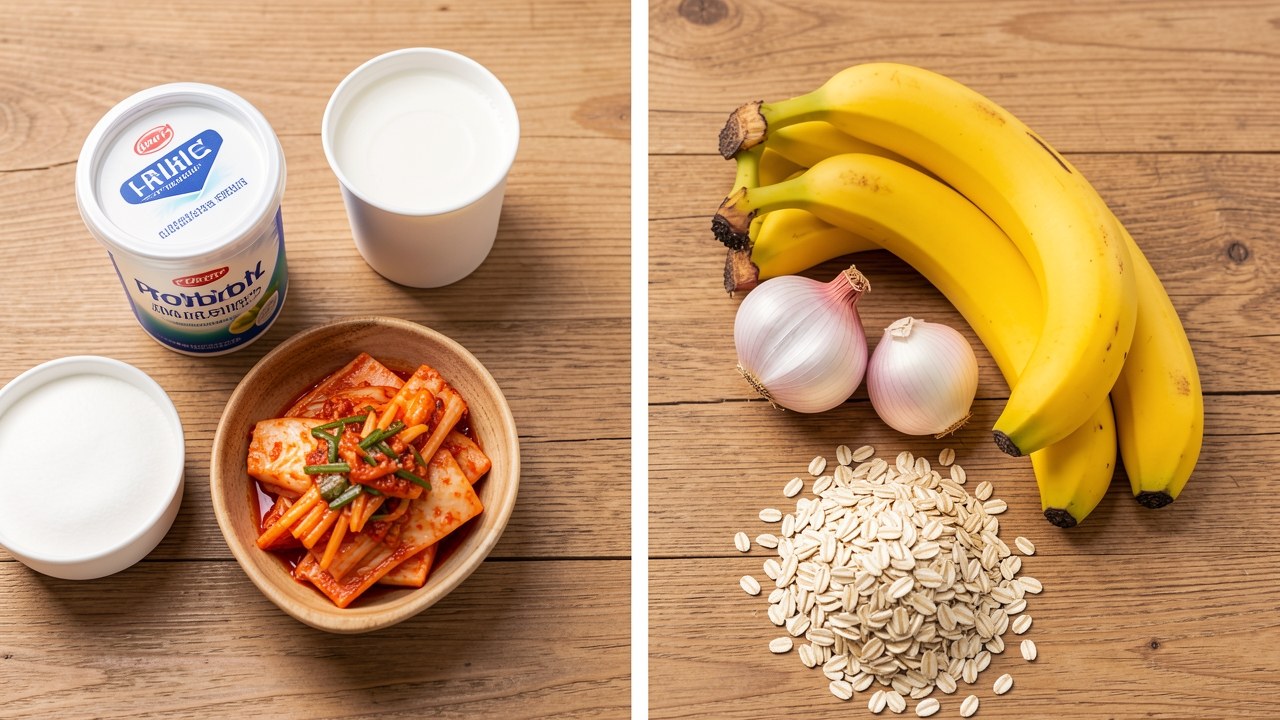
What Are Probiotics and Prebiotics?
Probiotics are live microorganisms that, when consumed in adequate amounts, may provide health benefits. They are found in fermented foods and some supplements. Prebiotics, in contrast, are compounds in food that your body does not digest but that serve as food for beneficial gut bacteria, usually in the form of fiber.
In simple terms, probiotics are the helpful bacteria themselves, while prebiotics are the nourishment that helps those bacteria thrive in your digestive tract.
Sources: Mayo Clinic, Baylor College of Medicine Blog Network, University of Rochester Medicine
How They Support Gut Health: The Mechanics
Prebiotics and probiotics support gut health through distinct but complementary actions. Prebiotics are non-living components, typically dietary fibers, that are fermented by beneficial bacteria in the colon. This fermentation produces short-chain fatty acids and other compounds that nourish the gut lining and support a healthy microbiome.
Probiotics introduce live beneficial bacteria directly into the gut, helping to maintain or restore a balanced microbial community. While prebiotics feed the bacteria already present, probiotics add new, potentially beneficial strains.
- Prebiotics feed healthy gut bacteria.
- Probiotics add beneficial bacteria to the gut.
Sources: University of Rochester Medicine, Mayo Clinic Press
Key Differences at a Glance
The table below summarizes the main differences between prebiotics and probiotics, based on current evidence.
| Option | Category | Nature | Primary role | Common food sources | Examples |
|---|---|---|---|---|---|
| Prebiotics | Gut health component | Non-living compounds (typically fiber) | Feed healthy gut bacteria | Fiber-rich foods (e.g., onions, garlic, asparagus, bananas, oats, beans) | Inulin, fructooligosaccharides, galactooligosaccharides |
| Probiotics | Gut health component | Living microorganisms (bacteria or yeast) | Add beneficial bacteria to the gut | Fermented foods (e.g., yogurt, kefir, sauerkraut, kimchi, miso) | Lactobacillus, Bifidobacterium, Saccharomyces boulardii |
Sources: University of Rochester Medicine, Baylor College of Medicine Blog Network, Mayo Clinic, Mayo Clinic Press, Journal of Food Science and Technology (PMC)
Food Sources of Prebiotics and Probiotics
Probiotic foods are naturally found in fermented foods such as yogurt, kefir, sauerkraut, kimchi, miso, and tempeh. Prebiotic foods are typically high in fiber and include onions, garlic, asparagus, bananas, oats, beans, and whole grains.
Including a variety of these foods in your daily meals can help supply both types of gut-supporting components. For example, a breakfast of yogurt with sliced banana and oats provides both probiotics from the yogurt and prebiotic fibers from the banana and oats.
- Probiotic-rich: yogurt, kefir, sauerkraut, kimchi, miso, tempeh
- Prebiotic-rich: onions, garlic, asparagus, bananas, oats, beans, whole grains
Sources: Baylor College of Medicine Blog Network, Mayo Clinic, Mayo Clinic Press
Why Synergizing Prebiotics and Probiotics Matters
Prebiotics and probiotics work together synergistically. Prebiotics provide the food that helps probiotics and other beneficial bacteria thrive in the gut. When a product or meal combines both, it is called a synbiotic.
By consuming prebiotics and probiotics together, you support both the introduction of beneficial bacteria and their continued growth and activity, which may enhance their health effects.
Sources: Mayo Clinic, Journal of Food Science and Technology (PMC)
Can You Rely on Foods Alone?
In most cases, eating a healthy variety of foods gives your body the necessary amount of prebiotics and probiotics. Whole foods also offer additional nutrients, like antioxidants, vitamins, and minerals, that supplements cannot fully replicate.
For most adults without underlying health conditions, adding prebiotic- and probiotic-rich foods to the diet is safe and can be an effective way to support gut health. Supplements may be an option for some, but they are not a substitute for a healthy diet.
Sources: University of Rochester Medicine, Baylor College of Medicine Blog Network, Mayo Clinic
Potential Side Effects and Recommended Intake
Side effects from probiotics and prebiotics seem to be rare, and most adults without health concerns can safely add foods containing them to their diets. However, the U.S. Food and Drug Administration does not regulate probiotic and prebiotic supplements, and there has been little study of their safety. People with compromised immune systems or other medical conditions should consult a healthcare provider before using supplements.
Currently, there is no official recommended daily intake for prebiotics or probiotics. The evidence for specific health benefits is still emerging and is strain-specific, meaning not all probiotics have the same effects.
- Most adults can safely consume prebiotics and probiotics through foods.
- Supplements are not FDA-regulated and their safety has not been extensively studied.
- Consult a healthcare provider if you have underlying health conditions.
Sources: Mayo Clinic, University of Rochester Medicine
Answers to Common Confusions
A common question is whether a banana is a prebiotic food. Yes, bananas are a source of prebiotic fiber, along with oats, onions, garlic, and asparagus. Some fermented foods may not contain live probiotics if they have been pasteurized or processed, so check labels for 'live and active cultures'.
Another misconception is that all fermented foods contain probiotics. While many do, the live cultures can be destroyed during processing. Similarly, not all fiber is prebiotic; prebiotics specifically feed beneficial bacteria in the gut.
Sources: Mayo Clinic Press, University of Rochester Medicine
Frequently asked questions
Do I need to take prebiotic and probiotic supplements or can I eat them in food?
You can generally get the prebiotics and probiotics you need from a varied diet. Most adults can obtain adequate amounts from fiber-rich and fermented foods, and these whole foods also provide other nutrients that supplements may not fully replicate. If you consider supplements, note that the FDA does not regulate them, and their safety has been less studied.
Sources: University of Rochester Medicine, Baylor College of Medicine Blog Network, Mayo ClinicWhat is a synbiotic and why is it beneficial?
A synbiotic is a product that combines both probiotics and prebiotics. This combination is beneficial because the prebiotic component provides food for the probiotic microorganisms, helping them survive and thrive in the gut, which may enhance their positive effects.
Sources: Mayo Clinic, Journal of Food Science and Technology (PMC)Which foods contain both prebiotics and probiotics?
Some foods naturally contain both, such as certain yogurts that include added prebiotic fibers, but most whole foods provide either one or the other. You can combine them in a meal, like yogurt with bananas and oats, to get both in one sitting.
Sources: Baylor College of Medicine Blog Network, Mayo Clinic PressAre prebiotics safe for people with irritable bowel syndrome?
There is no universal answer, as individual tolerance varies. Some people with IBS may find that certain prebiotic fibers worsen symptoms, while others tolerate them. If you have IBS, it is best to consult a healthcare provider for personalized advice, as the evidence for prebiotics in IBS is not well-established.
Sources: Mayo ClinicCan you eat too many prebiotic foods?
There is no established upper limit for prebiotic intake from foods. However, a sudden increase in high-fiber prebiotic foods can cause temporary gas or bloating in some people. Gradually increasing intake can help your digestive system adjust.
Sources: Mayo ClinicAre bananas a prebiotic food?
Yes, bananas are a source of prebiotic fiber. They are commonly listed among foods that support gut bacteria.
Sources: Mayo Clinic, Baylor College of Medicine Blog NetworkDo you need both prebiotics and probiotics?
Both play distinct and complementary roles in supporting gut health. Probiotics add beneficial bacteria, while prebiotics feed those bacteria, helping them flourish. A healthy diet typically includes both, and they can work together synergistically.
Sources: University of Rochester Medicine, Mayo ClinicWhich is better: prebiotic or probiotic foods?
Neither is inherently better; they serve different purposes. The best approach is to include both in your diet, as they support gut health in different ways. For most people, a variety of prebiotic- and probiotic-rich foods is more beneficial than focusing on one.
Sources: University of Rochester Medicine, Mayo ClinicSources
- Prebiotics vs. Probiotics: What’s the Difference and Do You Need Both? — University of Rochester Medicine
- Probiotics and prebiotics: What you should know — Mayo Clinic
- Go with your gut: A guide to probiotics and prebiotics — Baylor College of Medicine Blog Network
- Probiotics vs. prebiotics: How to support a healthy, balanced gut microbiome - Mayo Clinic Press — Mayo Clinic Press
- Probiotics, prebiotics and synbiotics- a review — Journal of Food Science and Technology (PMC)